
Topic
Rigging, Crane & Hoisting Training
Lifting operations demand clear communication and disciplined inspection practices. This page helps teams find practical rigging and crane-related online courses for field and industrial environments.
Compliance Overview
Rigging and Hoisting Training Canada for Field Operations
Rigging and hoisting training in Canada is frequently assigned where suspended loads, crane support tasks, or heavy lift coordination are present. The core goal is predictable load control through planning, communication, and equipment discipline. Strong training reduces improvisation during high-consequence work.
Workers should understand role boundaries between operators, riggers, signalers, and supervisors before any lift begins. Clear role separation supports safer handoffs and reduces conflicting instructions. In complex projects, this baseline alignment is often the difference between controlled execution and preventable near misses.
Crane Hand Signals, Load Weight, and Sling Angle Basics
Signal clarity and load math fundamentals are foundational controls in rigging safety. Training should cover standard hand signals, communication backup methods, and practical estimation limits for load weight and center of gravity. Miscommunication during movement can escalate quickly in congested environments.
Sling angle effects and hardware selection should be taught as decision tools, not abstract theory. Workers need to identify when configurations increase force beyond safe limits and when to pause work. Consistent instruction improves confidence and reduces rushed judgments.
Critical Lift Planning and Lift Supervision Responsibilities
Critical lifts require structured planning and clear approval authority. Training should reinforce when additional controls are needed, how to verify rigging plans, and what conditions justify postponement. Supervisors need competence in both technical checks and stop-work escalation.
Pre-lift meetings should confirm route constraints, exclusion zones, weather effects, and contingency actions. When teams treat critical lift plans as active controls rather than paperwork, execution quality improves and field decisions remain aligned under pressure.
Rigging Equipment Inspection and Rejection Criteria
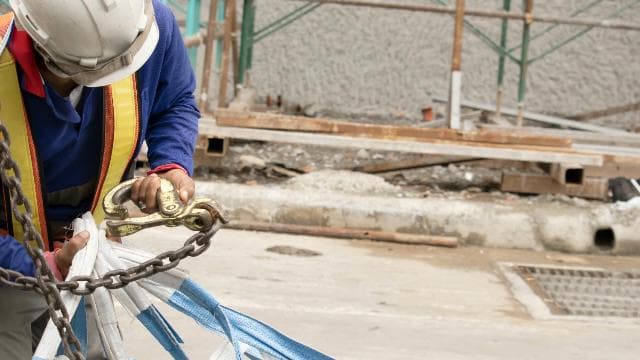
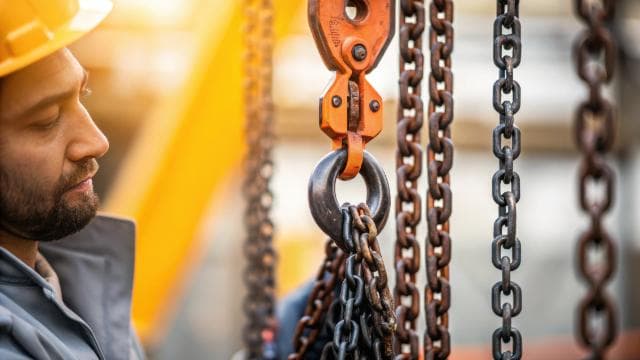
Rigging inspection training should include practical defect recognition for slings, hooks, shackles, and connectors. Workers must know what damage or deformation requires immediate removal from service. Ambiguous standards around wear and rejection are a recurring source of preventable risk.
Documentation expectations are equally important. Inspection records should support traceability, supervisor review, and timely replacement decisions. Clear inspection workflows improve equipment reliability and provide defensible evidence during audits, incident reviews, and client compliance checks.
Integrating Rigging with Fall Protection and Site Safety
Rigging tasks often overlap with elevated work, mobile equipment movement, and changing site conditions. Training should therefore integrate with adjacent controls rather than remain siloed. Workers benefit when planning tools reference both lifting and surrounding hazard exposures.
Organizations commonly pair rigging pathways with fall protection, construction field safety, and ground disturbance training for coordinated crews. Interlinked assignments improve planning continuity and reduce gaps between task-specific modules. This approach supports better supervision and safer multi-trade execution.
Rigging Competency Matrix for Lift Planning and Crew Assignment
Rigging programs are more reliable when employers define competency levels for signalers, riggers, lift planners, and supervisors. A role-based matrix makes it clear who can perform routine lifts, who can support complex lifts, and who has approval authority for critical lift controls. This prevents task drift and unclear accountability.
Matrix governance should include revalidation triggers after incidents, equipment changes, or extended inactivity. Keeping this process current supports safer crew assignment under schedule pressure. Linking rigging competency with fall protection and construction field safety pathways improves readiness when project tasks intersect in the same work area.
Common Rigging and Hoisting Search Terms for Training Planning
Teams regularly search for rigging training Canada, crane hand signal course, sling angle calculator training, hoisting safety certification, and critical lift planning instruction. Standardizing these search terms inside your training matrix helps operations and safety teams choose consistent modules when projects scale quickly.
Planning should confirm role designation, lift complexity, equipment compatibility, and supervisor oversight before assignment. Integrating rigging pathways with fall protection, ground disturbance, and construction field safety strengthens control continuity across multi-trade environments. Interlinked training plans reduce handoff errors and improve lift execution consistency.
Related compliance pathways: Ground Disturbance & Excavation Training, Forklift & Mobile Equipment Training and Construction Site & Field Safety Training.
Popular Courses For This Topic
Browse related online courses and open any course for full details.
5hRigging - Level 1
$124.99 CAD
3hRigging (Basic)
$99.99 CAD
10 minCrane and Hoist Hand Signals
Free
10 minWire Rope Rigging Inspection & Replacement
Free
30 minRigging Safety in Industrial and Construction Environments
$49.99 CAD
1h 30mOverhead Crane - Operator Safety (CAN)
$99.99 CAD
5hOverhead Crane & Rigging Level 1
$194.99 CAD
1h 15mOverhead Crane - Operator Training
$98.99 CAD
3h 30mRigging (Intermediate)
$149.99 CAD
Related Topics
View all topicsTopic
Forklift & Mobile Equipment Training
Topic
Construction Site & Field Safety Training
Also Browse by Industry
Use industry hubs to view course groupings for sector-specific search intent.
Frequently Asked Questions
What is the difference between Rigging Basic and Rigging Level 1?
Rigging Basic courses usually focus on foundational lifting concepts, while Level 1 programs often add broader operational depth and role expectations. Employers use different naming conventions, so the right choice depends on task complexity and responsibility level on your site. For entry-level workers, foundational content can build core hazard recognition and communication habits. For leads or workers handling more complex lifts, higher-level training is often preferred. The most practical approach is role-based assignment: match course depth to actual lifting duties, not job title alone, then reinforce with site-specific procedures.
Does rigging training qualify me to operate a crane?
Not by itself in most cases. Rigging training typically focuses on load preparation, attachment methods, signaling, and hazard control around lifting operations. Crane operation has additional competency requirements related to machine control, operational limits, and operator-specific responsibilities. Employers usually treat rigging and crane operation as complementary but distinct competencies. Workers involved in lifts may need both, depending on their role. If you are moving into operator duties, confirm your employer's specific qualification path rather than assuming a rigging credential alone provides full operator authorization.
Do signalers need formal crane hand signal training?
In many lifting operations, yes. Hand signal consistency is critical when visibility, noise, and site complexity make verbal communication unreliable. Formal hand signal training helps teams align on standardized commands and reduces interpretation errors during lifts. Employers commonly require this training for workers who direct crane or hoist movement, especially on busy construction and industrial sites. Even experienced crews benefit from standardized refreshers because mixed teams can otherwise bring conflicting habits from prior projects. Clear signal competency improves lift control and reduces the risk of miscommunication-related incidents.
How often should rigging and hoisting training be refreshed?
Refresh frequency depends on role, lifting complexity, and employer standards, but many organizations retrain periodically or after role changes and incidents. High-risk operations often require tighter refresh expectations because procedural drift can build quickly under schedule pressure. Employers may also retrain when new equipment, sling types, or lifting procedures are introduced. From an operational perspective, current training records support smoother mobilization and stronger audit readiness. A planned refresher cycle also improves communication between operators, riggers, and supervisors by keeping terminology and control expectations aligned.
Can rigging training be completed fully online?
Online training is widely used for theory and foundational rigging knowledge, including hazard awareness, load considerations, and communication practices. Depending on role and site policy, employers may require additional practical verification before workers are assigned critical lift duties. This blended model is common because online learning is efficient for knowledge delivery while practical checks confirm field readiness. If your role includes complex lifts, expect a higher bar for competency evidence. Complete online modules early, then confirm whether your employer requires practical assessments, mentorship sign-off, or additional internal lift planning instruction.
Is wire rope and sling inspection training necessary for non-supervisors?
In many operations, yes. Workers directly involved in rigging tasks often need to identify obvious rejection criteria and know when to remove equipment from service. Inspection awareness is not only a supervisor responsibility because frontline workers are usually closest to day-to-day equipment condition. Employers often assign inspection training broadly to reduce reliance on a single checker and improve early hazard detection. Better inspection behavior also supports maintenance planning and reduces avoidable downtime. For teams with frequent lifts, standardized inspection competency is one of the most practical risk controls available.
Who should take crane and hoist hand signal training on a crew?
Any worker expected to direct crane or hoist movement should usually complete hand signal training, and many employers include backups to maintain continuity when staffing changes. Supervisors may also take the training so they can verify communication quality during lift planning and execution. On multi-employer sites, formal hand signal competency helps align mixed crews that may use different habits. This improves coordination and reduces avoidable stop-work situations. A practical staffing model includes primary signalers, alternates, and supervisors with shared signal standards to keep lifting operations predictable across shifts.
What records do contractors usually request for rigging compliance?
Contractors typically request evidence that workers assigned to lifting activities completed relevant training and are authorized for their role scope. In many projects, this includes completion records, role assignment details, and any internal practical verification used by the employer. Strong documentation supports prequalification, orientation approvals, and audit readiness. For organizations running multiple crews, centralized digital records make it easier to verify readiness before mobilization. Keeping this information current reduces project delays and helps prevent last-minute reassignment when training proof is missing or outdated.