







Topic
Construction Site & Field Safety Training
Construction and field crews face changing hazards, tight timelines, and mixed work environments. This page helps you select practical online safety training for common site and field risk categories.
Compliance Overview
Construction Safety Training Online Canada for New Hires
Construction safety training online in Canada is often the fastest way to establish baseline awareness before workers arrive on site. Effective onboarding should cover hazard recognition, reporting expectations, and control hierarchy in language that matches field realities. Early clarity reduces avoidable confusion during mobilization.
New workers benefit from role-specific pathways rather than one generic package. Trades, helpers, supervisors, and contractors face different exposure profiles. Assigning targeted modules improves relevance and completion quality while preserving compliance confidence for clients and project managers.
Site Orientation, Hazard Assessment, and Toolbox Talk Practices
Site orientation should connect project rules to day-one behavior, not simply review policy documents. Training should reinforce how hazard assessments are completed, how controls are selected, and when work must stop for reassessment. Workers need clear examples tied to live site conditions.
Toolbox talk quality also matters. Supervisors should be trained to run briefings that are specific, timely, and actionable, with follow-up on unresolved risks. Consistent communication standards improve alignment across crews and reduce variation between shifts and subcontractors.
High-Risk Task Training: Hot Work, Confined Space, and LOTO
Field projects frequently involve high-risk tasks that demand specialized controls. Construction training programs should define when additional modules are required for hot work, confined space support, and lockout or energy isolation. Workers should know where baseline awareness ends and advanced authorization begins.
Sequencing is critical. Teams should complete prerequisite learning before permits are issued, then validate task-specific controls during pre-job planning. This layered model helps prevent last-minute scope decisions that bypass training safeguards under schedule pressure.
Supervisor Construction Safety Training and Due Diligence
Supervisors shape field behavior through planning, assignment, and enforcement decisions. Supervisor-focused construction safety training should emphasize due diligence, documentation standards, and corrective action follow-through. Without leadership consistency, even well-designed worker training can degrade in practice.
Organizations should track supervisor competency alongside worker completion to identify control gaps early. This includes incident trend review, communication quality, and pre-task planning effectiveness. Strong supervisor capability improves both compliance outcomes and operational reliability.
Building a Construction Training Matrix That Matches Trade Roles
A practical construction training matrix links courses to trade tasks, equipment exposure, and project phases. This avoids over-assignment and ensures workers receive relevant instruction before high-risk activities begin. Clear matrices also simplify onboarding decisions during workforce scaling.
Interlinking construction pathways with topic-specific pages such as fall protection, rigging, confined space, and ground disturbance creates better continuity for project teams. Coordinators can assign by role and task sequence, improving readiness without overwhelming crews with unnecessary content.
How to Keep Construction Training Current During Project Changes
Construction projects evolve quickly, so training plans must adapt as scope, sequencing, and subcontractor makeup shifts. Employers should schedule periodic training reviews tied to phase changes and high-risk work packages. This avoids relying on outdated assumptions when new hazards or responsibilities are introduced mid-project.
A change-driven review model also improves mobilization speed for incoming crews. Coordinators can identify required modules early, verify completions, and align supervisor expectations before field exposure. Integrating these reviews with related topic pages helps maintain continuity across fall protection, rigging, confined space, and ground disturbance controls.
Common Construction Safety Search Terms and Assignment Standards
Frequently used terms include construction safety training online Canada, site orientation training, toolbox talk training, hazard assessment course, and contractor safety onboarding. Referencing these phrases in assignment standards makes it easier for supervisors and coordinators to translate job demands into clear training requirements.
Assignment standards should define baseline modules for all workers plus trade-specific pathways for high-risk tasks. Interlinking construction training with fall protection, rigging, confined space, and ground disturbance keeps program logic coherent. This approach supports safer mobilization and more consistent performance across changing project phases.
Related compliance pathways: Ground Disturbance & Excavation Training, Fall Protection & Aerial Lift Training and Confined Space, H2S & Gas Detection Training.
Popular Courses For This Topic
Browse related online courses and open any course for full details.
1hTraffic Control Persons for Construction (Flagger)
$59.99 CAD
2h 30mWilderness & Bear Awareness
$69.99 CAD
1h 30mPropane Handling and Exchange
$49.99 CAD
1hBear Awareness Online
$34.99 CAD
1hWorking Alone Awareness Training
$49.99 CAD
1h 15mChainsaw Safety - Training
$79.99 CAD
Related Topics
View all topicsTopic
Fall Protection & Aerial Lift Training
Topic
Confined Space, H2S & Gas Detection Training
Also Browse by Industry
Use industry hubs to view course groupings for sector-specific search intent.
Frequently Asked Questions
Is traffic control person (flagger) training required in Canada?
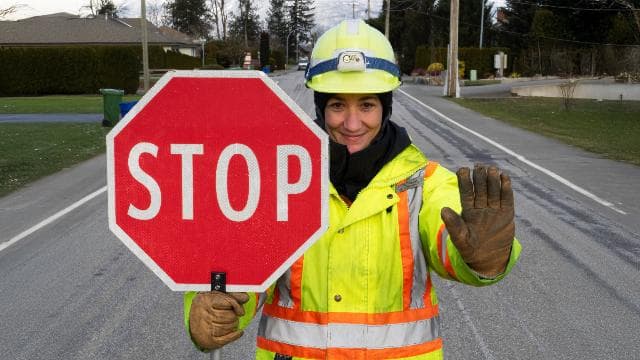
On many projects, yes. Traffic control roles are often treated as safety-critical because they influence vehicle and pedestrian movement around active work zones. Requirements can vary by contract and jurisdiction, but employers and prime contractors commonly require formal training before assigning flagging duties. In practice, sites use this as a baseline control to reduce preventable incidents in dynamic environments. Even when legal wording differs by location, client and contractor standards usually drive consistent training expectations. If your team performs roadside or access-control work, training should be completed before deployment.
Do workers need propane handling training for temporary jobsite tasks?
Many employers require propane handling training when workers connect, store, transport, or use propane cylinders as part of field operations. Short-duration tasks do not automatically remove risk, especially when crews are moving quickly between locations. Training helps workers identify safe handling steps, common error points, and emergency response actions if leaks or ignition hazards occur. In construction and service environments, this training is often bundled with broader site safety orientation. If propane is part of your normal task flow, completing dedicated handling training is usually the safest and most defensible approach.
Is bear awareness training relevant outside remote camps?
Yes, depending on where crews travel and work. Workers may encounter wildlife risk not only in camps but also in corridor, utility, forestry-edge, and roadside environments. Employers often assign bear awareness to field teams that enter transitional or low-supervision areas where response support may be limited. The goal is practical prevention: reducing avoidable encounters and improving decision quality when signs of wildlife activity are present. For mixed crews with rotating assignments, awareness training helps maintain consistent field behavior across different project locations.
When is working alone awareness training required?
Working alone awareness is commonly required when workers operate with limited direct supervision or delayed emergency support. In many construction and field service operations, that includes off-hours callouts, remote inspections, after-hours maintenance, and single-worker dispatch tasks. Employers use this training to reinforce communication expectations, escalation procedures, and personal risk management. It is especially important where travel times or coverage gaps increase consequence severity. If your role includes isolated tasks, this training is often a practical baseline requirement even when the work itself appears routine.
Is chainsaw safety training needed for occasional cutting tasks?
In most cases, yes, if chainsaw use is part of assigned duties. Occasional use still carries high injury potential, and employers are expected to ensure workers are trained for the tasks they perform. Training helps workers understand operation limits, kickback risk, maintenance checks, and safe work positioning under variable field conditions. In many organizations, chainsaw tasks are restricted to trained personnel only, even when the job appears minor. If your crew may need saw use during vegetation clearing or access prep, pre-assigning training is safer than addressing competency after urgent field demands appear.
Can construction field safety courses be delivered fully online?
Online delivery is commonly used for foundational knowledge and is often the fastest way to prepare crews before mobilization. For certain tasks, employers may still add site-specific orientation, practical demonstrations, or competency checks depending on risk profile and client rules. A blended model is common in construction because it combines speed with operational relevance. Online learning standardizes baseline expectations across teams, while local orientation addresses hazards unique to each project. If your workforce rotates frequently, this approach usually provides the best balance between compliance reliability and deployment efficiency.
What is the best training bundle for new construction labourers?
The best bundle depends on project scope, but many employers start with core awareness training and then add role-specific modules. A common baseline includes workplace safety awareness, WHMIS-related hazard communication, and field risk topics relevant to the assignment such as flagger, working alone, or equipment awareness. This structure keeps onboarding practical without overloading workers with irrelevant content. For labourers moving across job types, modular training paths work well because supervisors can add targeted courses as duties evolve. Clear role-based assignment usually improves completion rates and operational readiness.
How often should construction field safety training be refreshed?
Refresh schedules vary, but many employers review training annually or whenever project risks, duties, or procedures change materially. In field environments, incident trends, near misses, and client audit findings often trigger refresher cycles earlier than planned. Because crews and sites change frequently, current records are important for access approvals and contractor coordination. Regular refreshers also help maintain consistent expectations across mixed teams and subcontractors. For organizations running multiple projects, a proactive refresh plan is usually more efficient than reacting to urgent compliance gaps during mobilization.
What documentation should prime contractors request from subcontractors?
Prime contractors usually request clear, role-relevant training records that align with assigned tasks and site controls. In practice, this means records should show completion status, timing, and the specific competency areas required for the scope of work. Many primes also expect evidence of internal orientation and supervisor verification before field deployment. Consistent documentation supports safer coordination, faster onboarding, and stronger audit outcomes. For subcontractors, keeping digital records organized by worker and role usually prevents access delays and reduces administrative friction during project startup.
How can companies reduce training delays when crews move between sites?
The most effective approach is a standardized base training path combined with site-specific add-ons. Workers complete core modules once, then receive targeted updates based on project hazards and client rules. This avoids repeated full retraining while preserving control quality. Centralized digital records are also critical because supervisors and coordinators can verify readiness quickly before dispatch. For organizations with frequent mobilization, this model improves speed without sacrificing compliance quality. It also helps identify true training gaps early, rather than discovering them at orientation when schedules are already tight.
