
Topic
WHMIS Online Training
WHMIS training is a core requirement for many Canadian workplaces. Use this page to quickly find WHMIS-related courses and practical answers to common compliance questions.
Compliance Overview
WHMIS Training Online Canada: Who Needs It
WHMIS training online in Canada is commonly assigned to workers who handle, store, transport, or work near hazardous products. In practical terms, that includes warehouse teams, maintenance staff, manufacturing crews, and many contractor roles. The objective is not just certificate completion. Employers need workers to understand labels, safety data sheets, and safe handling decisions in real work conditions.
An authoritative WHMIS program should connect hazard communication to daily tasks. Workers should be able to identify product classes, locate key SDS details quickly, and follow employer controls for storage, transfer, and emergency response. When teams treat WHMIS as an operating standard rather than a one-time onboarding checkbox, incident prevention and compliance quality usually improve.
Is WHMIS Mandatory in Ontario and BC
Across Ontario and British Columbia, WHMIS requirements are applied through employer obligations to provide suitable instruction and supervision for hazardous products. The legal framing differs by jurisdiction, but workplace expectations are similar. If a role includes exposure potential, WHMIS is typically part of baseline compliance before unsupervised work begins.
For multi-site employers, the most reliable approach is a standardized WHMIS foundation plus location-specific orientation. This reduces onboarding friction while still addressing local procedures, chemical inventories, and emergency planning. Workers moving between sites should expect refreshers where product mixes or control measures are materially different from previous assignments.
WHMIS Certificate Expiry and Refresher Training
There is no single universal expiry date that applies to every WHMIS certificate across all employers in Canada. Instead, employers must ensure workers remain competent for current hazards. Many organizations use annual or periodic refreshers, especially when procedures, products, or job scope changes create new risk exposure.
A strong refresher strategy is risk-based. High-turnover departments, contractor-heavy projects, and workplaces with frequent product changeouts generally need tighter retraining cycles. Keeping WHMIS current also supports audit readiness and smoother hiring. Recent, role-relevant proof of WHMIS training is often a practical requirement for fast mobilization.
WHMIS and TDG Training Differences for Employers
WHMIS and TDG training are frequently paired, but they solve different problems. WHMIS addresses hazardous products in the workplace, including labels, SDS interpretation, and safe use controls. TDG addresses regulated transport activities such as classification, shipping documentation, and movement of dangerous goods through logistics chains.
Employers should assign training based on task ownership. Workers who handle products on site may only need WHMIS, while shipping and receiving teams often need both WHMIS and TDG. When roles overlap, combining both pathways prevents compliance gaps between warehouse operations and transportation activities.
How to Use WHMIS Training for Faster Onboarding
Teams that onboard quickly usually separate core WHMIS training from site-specific instruction. Workers complete online WHMIS early, then supervisors deliver concise local orientation focused on storage areas, emergency equipment, and reporting expectations. This staged model keeps training practical while reducing first-shift delays.
For better implementation, map WHMIS requirements to job families and keep completion records searchable by site and supervisor. Pair WHMIS with related controls where needed, such as lockout and hazard communication refreshers. This structure supports internal consistency and reinforces cross-topic learning with pages like TDG, confined space, and workplace safety awareness.
WHMIS Training Matrix for Contractors, Supervisors, and Office Teams
A durable WHMIS program uses a training matrix that distinguishes who needs baseline awareness, who needs deeper product handling instruction, and who needs oversight-level competency. Contractors, temporary workers, and internal teams should all be mapped against task exposure, not job title alone. This reduces over-assignment while protecting high-risk roles with stronger coverage.
Supervisors and coordinators should review matrix assignments during mobilization, role change, and product change events. Keeping matrix logic visible makes decisions easier to explain during audits and client prequalification. Organizations also gain better continuity when WHMIS pathways are linked to TDG, confined space, and workplace safety awareness training for shared hazard contexts.
Related compliance pathways: TDG Online Training, Workplace Safety Awareness Training and Confined Space, H2S & Gas Detection Training.
Popular Courses For This Topic
Browse related online courses and open any course for full details.
1hWHMIS 2025
$29.99 CAD
1h 30mFirefighting & Fire Extinguisher Safety
$79.99 CAD
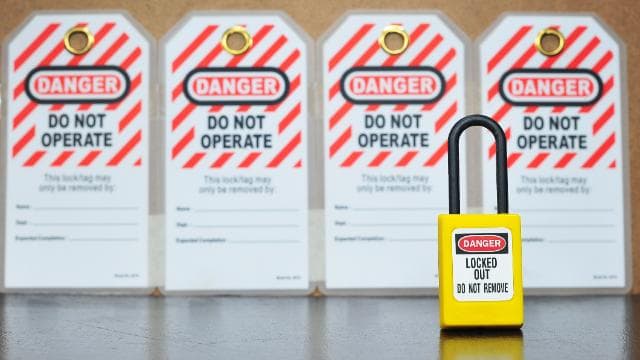
1h 15mLockout Tagout (LOTO)
$49.99 CAD
1h 15mPersonal Protective Equipment for Employees (PPE)
$49.99 CAD
1h 15mHazard Assessment Safety
$49.99 CAD
1hLockout Tagout in the Workplace
$49.99 CAD
40 minSafe Manual Material Handling
$49.99 CAD
50 minSlips, Trips and Falls
$49.99 CAD
8hLeadership for Safety Excellence - Alberta Only
$99.99 CAD
1hFire Extinguisher (CAN)
$39.99 CAD
Related Topics
View all topicsTopic
Workplace Safety Awareness Training
Topic
Confined Space, H2S & Gas Detection Training
Also Browse by Industry
Use industry hubs to view course groupings for sector-specific search intent.
Frequently Asked Questions
Is WHMIS training mandatory in Ontario?
In Ontario, WHMIS training is generally required when a worker may be exposed to hazardous products at work. Under Ontario health and safety rules, employers must provide information, instruction, and supervision that is appropriate for the worker and the job. In practice, that means WHMIS training is usually treated as mandatory for many roles in construction, warehousing, manufacturing, transportation, and maintenance. If your job involves handling, storing, or being around controlled products, you should expect WHMIS as a baseline requirement. Employers may also add site-specific procedures and product-specific instruction beyond general WHMIS content.
Do I need WHMIS training in British Columbia if I already have experience?
In BC, experience alone usually does not replace formal WHMIS instruction if your role includes exposure to hazardous products. Employers are still responsible for ensuring workers understand hazard communication, safe handling procedures, and emergency measures relevant to their work. Even experienced workers may need updated instruction when products, labels, safety data sheets, or site procedures change. Most employers treat WHMIS as a current compliance and risk-control requirement, not a one-time career credential. If you move to a new employer or new site, expect a review of your prior training plus any additional BC workplace-specific orientation.
Does a WHMIS certificate expire in Canada?
There is no single national expiry date printed into WHMIS law that applies equally to every employer policy. Across Canada, employers are expected to ensure workers remain competent for the hazards they face, which often means periodic refresher training. Many companies use annual or every-three-year refresh cycles, while others retrain when job duties, products, or procedures change. From a hiring and compliance perspective, employers usually care about whether your WHMIS training is recent and relevant to the role. If your certificate is older, a refresher is often the fastest way to avoid onboarding delays.
Is online WHMIS training accepted by employers in Canada?
Yes, many employers across Canada accept online WHMIS training, especially for onboarding and contractor readiness. The key is that training must be clear, relevant, and supported by workplace-specific instruction where required. Online delivery works well because workers can complete it quickly, supervisors can verify completion, and records are easier to manage across multiple locations. Some employers also pair online WHMIS with a short site orientation to cover local controls, storage areas, and emergency procedures. If you are training for a specific job, confirm any extra client or site requirements before starting work.
Do supervisors and managers need WHMIS training too?
Usually yes, especially when supervisors are responsible for directing work around hazardous products. Across Canada, supervisor responsibilities include ensuring workers follow safe procedures and understand hazards. That is difficult to do effectively without WHMIS knowledge. Many employers therefore assign WHMIS to supervisors even if they are not directly handling products all day. Supervisors often also need additional training in hazard assessment, incident response, and role-specific controls. From a practical perspective, having supervisors trained helps prevent inconsistent instructions on shift and improves overall compliance documentation during audits or client reviews.
What is the difference between WHMIS and TDG training?
WHMIS and TDG solve different safety problems. WHMIS focuses on hazardous products in workplaces: labels, safety data sheets, handling, storage, and worker protection. TDG (Transportation of Dangerous Goods) focuses on shipping and transport requirements such as classification, documentation, packaging, and movement rules. Many companies need both depending on operations. For example, a warehouse team might need WHMIS for on-site handling, while shipping personnel also need TDG for transport compliance. If your role touches both workplace use and transportation workflows, employers often assign both courses to close compliance gaps.
If I change employers, do I need to retake WHMIS?
Often yes, or at least complete a refresher plus site-specific orientation. WHMIS principles are standardized, but each employer may use different products, labels, storage processes, and emergency procedures. Across Canada, employers must ensure training is appropriate to the hazards in their own workplace, so previous completion does not always satisfy internal policy by itself. Retaking or refreshing WHMIS is common during onboarding because it reduces risk and creates clear training records tied to the current employer. If you are moving between sectors, a fresh course can also make your start date smoother.
How long does WHMIS online training usually take?
Most WHMIS online courses are designed to be completed in roughly one to three hours, depending on content depth, learner pace, and assessment format. Workers familiar with hazard communication may finish faster, while new workers may take more time to review examples and definitions. Employers often prefer self-paced formats because teams can complete training before shift starts, between assignments, or during onboarding windows without waiting for classroom schedules. If you are training for immediate job placement, choose a course with straightforward navigation and clear completion requirements so you can finish quickly and provide proof when requested.
Do temporary workers and contractors need WHMIS in Canada?
In most cases, yes. Temporary workers and contractors are commonly required to complete WHMIS when their duties involve exposure to hazardous products. This is especially common in construction, industrial maintenance, warehousing, and logistics environments across Canada. Client sites often require proof of training before access is granted, even for short-duration contracts. Employers and prime contractors may also require additional orientation covering local controls and emergency steps. If you work across sites, keeping current WHMIS training on hand can reduce delays and make mobilization easier when assignments start on short notice.
Are WHMIS requirements the same across all Canadian provinces?
The core WHMIS framework is national, so the hazard communication model is broadly consistent across provinces. However, enforcement context, employer policies, and site-level expectations can still differ by jurisdiction. That is why employers usually combine WHMIS with local workplace procedures and role-specific instruction. For workers, the safest assumption is that your WHMIS foundation should be current, then supplemented by employer orientation wherever you are working. For companies operating in multiple provinces, standardized WHMIS plus local add-ons is usually the most practical compliance approach.